


Housing for Healthcare Professionals: How Property Owners Can Attract Nurses, Doctors, and Medical Staff

Healthcare professionals need more than a place to sleep. They need a comfortable, convenient, and fully furnished home where they can rest, recharge, and focus on caring for others. For property owners, this creates an opportunity to serve a growing range of mid-term housing needs.
Whether you're a landlord, furnished rental provider, property manager, or real estate investor, understanding what healthcare professionals look for in a rental can help you position your property for potential mid-term housing opportunities.
From travel nurse housing to furnished apartments near hospitals, the right combination of location, amenities, and flexible accommodation options can make a property more suitable for healthcare workers on temporary assignments.
In this guide, we'll explore what housing for healthcare professionals is, why it matters, how it differs from traditional rentals, and how Mid Term Rental Properties (MTRP) can help connect property owners with potential mid-term guests.
- Healthcare worker housing serves nurses, physicians, medical technicians, allied health professionals, and hospital support staff working away from home.
- Assignments can last from a few weeks to several months, so furnished mid-term rentals can be a practical alternative to six- or twelve-month leases.
- Location, a restful bedroom, move-in-ready furnishing, reliable Wi-Fi, and transparent pricing matter most.
- MTRP is a guest allocation company that helps present suitable furnished properties for housing requests. Listing does not guarantee bookings.
Watch: Housing for Healthcare Professionals in 3 Minutes
Short on time? Our 3-minute explainer covers what healthcare worker housing is, why it matters, how a healthcare-friendly rental differs from a regular rental, the host checklist, and where Mid Term Rental Properties comes in.
- 0:00The healthcare housing challenge
- 0:14What is healthcare worker housing?
- 0:38Why it matters
- 0:59Regular vs. healthcare-friendly rental
- 1:35Host checklist
- 2:05Where MTRP comes in
- 2:39Your property could meet a housing need
What Is Housing for Healthcare Professionals?
Housing for healthcare professionals refers to accommodation designed to meet the needs of people working in healthcare, including nurses, physicians, medical technicians, allied health professionals, and hospital support staff.
These professionals may need housing for several reasons:
- Travel nurses accepting temporary assignments in another city.
- Physicians and medical residents completing rotations or fellowships.
- Allied health professionals working on temporary contracts.
- Medical technicians supporting hospitals, laboratories, and diagnostic facilities.
- Healthcare workers relocating for new positions.
- Healthcare professionals attending training programs or specialized assignments.

Depending on the situation, their housing needs may range from a few weeks to several months or longer.
Unlike traditional rentals that commonly focus on six- or twelve-month leases, furnished mid-term rentals can offer an alternative for professionals who need a comfortable home for the duration of an assignment.
Healthcare worker housing may include furnished apartments, private homes, condominiums, and other suitable accommodations near hospitals, clinics, medical centers, and transportation routes.
The goal is straightforward: provide healthcare professionals with a practical place to live while they work away from home.
Why Healthcare Worker Housing Matters
Healthcare professionals often work demanding schedules. Long shifts, overnight duties, rotating schedules, and temporary assignments can make finding suitable accommodation challenging.
A rental that requires extensive furnishing, involves a long commute, or lacks basic conveniences may not be practical for someone arriving in a new city to begin work. Suitable housing can help address several everyday challenges.
1Convenient access to hospitals and medical centers
Location is one of the most important considerations when evaluating housing for healthcare professionals.
A property near a hospital, medical district, or reliable public transportation route may help reduce commuting time and make it easier for guests to manage their work schedules.
Property owners should highlight nearby hospitals, clinics, transit options, grocery stores, pharmacies, and other useful amenities in their listings.

2Comfortable spaces for rest and recovery
Healthcare workers need a comfortable environment where they can unwind after demanding shifts.
A quiet bedroom, quality mattress, blackout curtains, adequate storage, and reliable temperature control can help create a more restful living environment.
Noise reduction is particularly important for professionals who need to sleep during the day after overnight shifts.
3Move-in-ready accommodation
Professionals accepting temporary assignments may not want to purchase furniture, household essentials, or kitchen equipment for a stay lasting only a few months.
Fully furnished housing can simplify the transition by providing a bed, linens, seating, kitchenware, storage, and other everyday necessities. A well-prepared property allows guests to settle in without the added inconvenience of furnishing an entire home.
4Support for temporary assignments
Healthcare assignments vary in length. Some professionals may need accommodation for several weeks, while others may require a place to stay for multiple months.
Mid-term rentals can offer an alternative to traditional long-term leases, subject to the property's availability, local regulations, and the terms agreed upon by the parties.
For property owners, this creates another potential use for furnished homes that are suitable for temporary housing.
Regular Rentals vs. Healthcare-Targeted Housing
Not every rental needs to be designed exclusively for healthcare workers. However, understanding their specific requirements can help owners make better decisions about furnishing, marketing, and preparing their properties.
| Feature | Traditional rental | Healthcare-friendly mid-term rental |
|---|---|---|
| Lease terms | Often six or twelve months | May offer flexible stays, depending on availability and applicable rules |
| Furnishing | May be unfurnished | Typically fully furnished and move-in ready |
| Location | General residential convenience | Convenient access to hospitals, clinics, and transportation |
| Bedroom | Standard sleeping arrangements | Quiet environment, comfortable bedding, and blackout curtains |
| Workspace | May not be included | Desk or suitable work area where possible |
| Amenities | Varies by property | Reliable Wi-Fi, laundry, kitchen, and essential household items |
| Target guests | General residential renters | May suit travel nurses, physicians, technicians, and other temporary healthcare workers |
The main difference is the attention given to the practical needs of someone working demanding or irregular hours.
A property does not necessarily need expensive upgrades to become more suitable. Often, thoughtful furnishing, clear listing information, convenient access, and reliable everyday amenities can make a meaningful difference.
How to Attract Healthcare Professionals to Your Furnished Rental
If you're looking to position your property for healthcare-related mid-term housing opportunities, start by evaluating it from the perspective of a guest arriving in an unfamiliar city.
1Choose and highlight a convenient location
Proximity to hospitals and medical centers can be a useful selling point, but distance alone is not the only consideration.
Highlight realistic driving times, nearby transit routes, parking availability, and access to grocery stores and pharmacies.
Avoid vague claims such as “minutes from every hospital.” Instead, identify relevant nearby facilities and provide accurate location information.
2Make the property fully furnished and move-in ready
A furnished rental should provide the essentials needed for everyday living. Consider including:
- A comfortable bed and quality mattress.
- Clean bedding, pillows, and linens.
- A sofa and dining area.
- A fully equipped kitchen with cookware and utensils.
- Adequate closet and storage space.
- A desk or designated workspace.
- Basic household cleaning supplies.
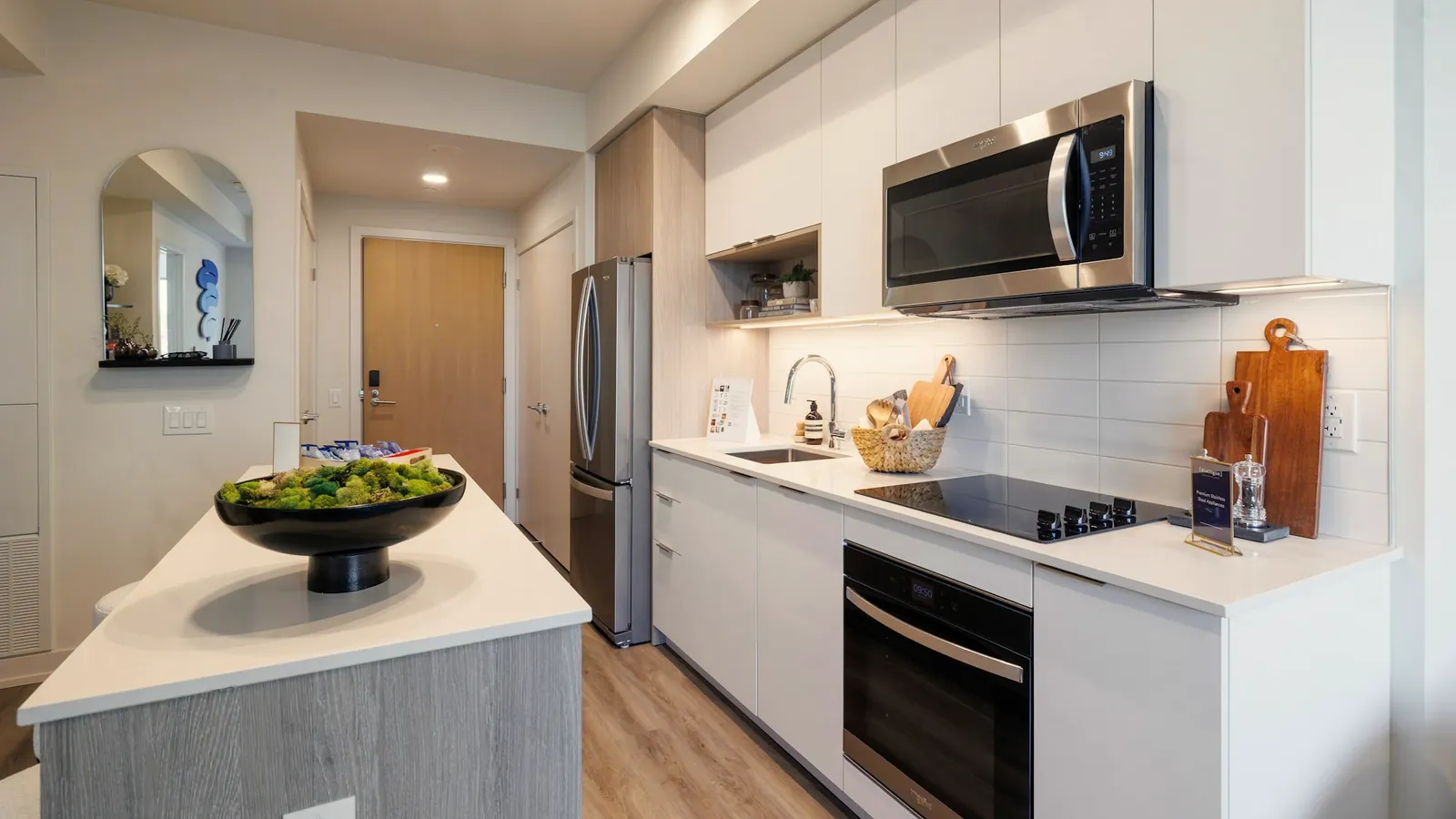
The objective is to create a functional home rather than simply placing furniture inside a property. See our property amenities page for more ideas.
3Create a bedroom that supports rest
Healthcare professionals may work night shifts, early mornings, or rotating schedules.
Consider adding blackout curtains, comfortable bedding, bedside lighting, and practical noise-reduction measures.
If the property is in a busy area, explain the sleeping arrangements and any potential noise considerations accurately in the listing.

4Provide reliable Wi-Fi and practical amenities
Reliable internet access supports everyday communication, online learning, personal administration, and entertainment. Other useful features include:
- In-unit laundry or accessible on-site laundry.
- A complete kitchen.
- Heating and air conditioning where appropriate.
- Secure entry.
- Parking where available.
- Convenient access to public transportation.


Clearly identify which amenities are included and whether any additional charges or restrictions apply.
5Keep pricing and stay requirements transparent
Guests arranging temporary housing need to understand the total cost before committing.
Make sure your listing clearly explains monthly rent, included utilities, parking, deposits, cleaning charges, minimum stay requirements, and other applicable fees.
Where feasible and legally permitted, consider stay options that accommodate different assignment lengths. Transparent pricing helps potential guests assess whether the property suits their needs and budget.
6Create a clear, accurate property listing
Your listing should answer the questions a healthcare professional is likely to ask before booking.
Include the property's general location, bedroom and bathroom count, furnishing details, amenities, parking arrangements, laundry access, internet availability, occupancy limits, and applicable house rules.
High-quality photographs should accurately represent the property and show the bedroom, kitchen, bathroom, living area, workspace, and other relevant features.
If the property is near a major hospital or medical center, highlight that advantage without overstating travel times.
7Explore housing partnerships and guest allocation networks
Reaching suitable guests can be just as important as preparing the property.
In addition to traditional rental advertising, property owners can explore professional housing networks, relocation channels, corporate accommodation and relocation housing providers, and other organizations that help connect people with temporary housing.
These channels may provide additional opportunities to present a property to potential guests whose accommodation requirements match its location, features, availability, and pricing.
Participation does not guarantee inquiries or bookings, so owners should evaluate each channel based on its requirements and suitability for their property.
- Convenient location, described accurately
- Fully furnished and move-in ready
- Quiet, restful bedroom with blackout curtains
- Reliable Wi-Fi, laundry, and a full kitchen
- Transparent pricing and stay requirements
- A clear, accurate listing with current photos
- The right channels to reach potential guests
How Mid Term Rental Properties (MTRP) Can Help Property Owners
Preparing a furnished property is one part of the process. Connecting it with potential guests who need mid-term accommodation is another.
Mid Term Rental Properties (MTRP) is a guest allocation company that connects property owners and furnished rental providers with potential guests seeking mid-term accommodations.
MTRP works with housing requests and accommodation partners to help identify and present suitable properties for consideration.
For property owners, this offers another channel through which their furnished rentals may be considered for housing opportunities involving corporate stays, relocation, temporary assignments, and other accommodation needs. Here's how the process generally works:
Submit your property
Property owners can provide their property details for consideration through MTRP's list your property page.
The listing should accurately describe the accommodation, including its location, furnishing, amenities, availability, and other relevant information.
Have your property reviewed
The property is reviewed against the applicable listing requirements and eligibility criteria (see our minimum property requirements).
Owners may need to clarify details or provide additional information to ensure the listing accurately represents the accommodation.
Make your property available for consideration
Once the property is approved for listing, it can be presented for suitable accommodation opportunities through MTRP's processes and housing network.
The suitability of a property depends on factors such as location, guest requirements, pricing, availability, and the specific needs of each housing request.
Respond to potential housing opportunities
When a relevant request arises, MTRP's accommodations team may contact property owners to discuss availability, pricing, and suitability.
Owners should keep their listing information up to date and respond promptly when contacted.

MTRP is a guest allocation company, not a traditional property management company. Listing a property does not guarantee a booking, a particular occupancy rate, or a specific amount of rental income. Opportunities depend on actual housing requests and the suitability of each property.
For eligible owners, however, participating in a housing network can provide an additional way to present a furnished property to potential mid-term guests.
What Types of Properties May Suit Healthcare Housing?
Healthcare professionals have different accommodation requirements, so there is no single property type that fits every assignment. Depending on the location and housing request, potentially suitable accommodations may include:
Furnished apartments
Practical for professionals seeking private, self-contained living spaces.
Condominiums
Potentially suitable when building rules, amenities, and occupancy requirements permit the intended stay.
Private furnished homes
May suit individuals, couples, or families relocating for work.
Townhomes
Can offer additional living space and storage.
Furnished properties near medical districts
May be convenient for professionals working at nearby healthcare facilities.

Property owners should verify local regulations, building restrictions, insurance requirements, and occupancy rules before offering accommodations for mid-term stays.
The most important factors are suitability, accurate information, comfort, and the ability to accommodate the guest's actual requirements.
Common Mistakes Property Owners Should Avoid
Even a well-located property may be less appealing if its listing or amenities do not address guests' practical needs. Watch out for these common mistakes:
Ignoring sleep comfort
A bedroom without adequate curtains, comfortable bedding, or reasonable noise control may be less suitable for shift workers.
Providing incomplete amenity information
Guests need to know whether Wi-Fi, laundry, parking, utilities, and kitchen equipment are available.
Using inaccurate photographs
Outdated or misleading images can create mismatched expectations and undermine trust.
Overlooking commute details
Explain the property's location accurately and identify relevant transportation options.
Offering unclear pricing
Disclose applicable charges and stay requirements before guests commit.
Assuming every inquiry will convert
Housing needs differ, and a property may not match the dates, budget, location, or specifications of a particular request.
Addressing these issues can help owners present their accommodations more effectively and set realistic expectations.
The Opportunity: Connecting Suitable Housing With Healthcare Needs
Housing for healthcare professionals is about more than placing a bed near a hospital. It means creating a practical living environment for people whose work schedules and temporary assignments may require a different type of accommodation.
For property owners, furnished mid-term rentals can provide an additional way to position a suitable property for temporary housing needs.
Choose a convenient location, furnish thoughtfully, provide reliable amenities, communicate clearly, and explore the right channels to reach potential guests.
Through its guest allocation model, Mid Term Rental Properties helps connect property owners and furnished rental providers with potential mid-term accommodation opportunities.
If you own a furnished, move-in-ready property, consider whether it could meet the needs of healthcare professionals, relocating workers, or other guests seeking temporary accommodation.
Related reading: mid-term rentals for healthcare staff and traveling nurses. Are you a healthcare professional looking for housing? See our guest accommodation information.
Frequently Asked Questions
What is housing for healthcare professionals?
Housing for healthcare professionals is accommodation intended to meet the needs of nurses, doctors, medical technicians, allied health workers, and other healthcare staff. It may include furnished apartments, private homes, and mid-term rentals near hospitals or medical facilities.
What is the difference between nurse housing and regular rentals?
Nurse housing often emphasizes furnished, move-in-ready accommodation, convenient hospital access, reliable Wi-Fi, laundry, and comfortable sleeping arrangements. Flexible stay options may also be useful for travel nurses and professionals on temporary assignments.
How long do healthcare professionals typically need housing?
The duration varies by assignment. Some professionals need housing for several weeks, while others require several months or longer. Owners should establish suitable stay terms based on their property's availability and applicable regulations.
What amenities should a healthcare-friendly rental provide?
Useful amenities include a comfortable bed, blackout curtains, reliable Wi-Fi, a full kitchen, laundry access, adequate storage, climate control, and convenient transportation or parking options.
Can MTRP guarantee bookings for my furnished property?
No. MTRP connects property owners with potential guests and accommodation opportunities, but inquiries and bookings depend on actual housing demand and the suitability of the property for each request.
How can I present my property through MTRP?
Visit MidTermRentalProperties.com or book a call with our team to explore the property listing process and review the applicable requirements.
Ready to Present Your Furnished Property to Potential Mid-Term Guests?
Your property could be suitable for someone who needs a comfortable place to stay while working away from home.
Mid Term Rental Properties (MTRP) helps connect property owners with potential mid-term housing opportunities.
If your property meets the applicable requirements, you can explore listing it through MTRP and making it available for consideration when suitable housing requests arise. Questions? Email info@midtermrentalproperties.com.
Mid Term Rental Properties does not guarantee bookings or occupancy. Housing opportunities depend on guest requirements, property suitability, location, availability, and pricing.