

Aisha Govani
Real Estate Investor
Aisha is a real estate investor, educator, podcast host and co-founder of Mid Term Rental Properties. She helps families homeschool confidently and supports investors in building flexible, profitable lives through real estate, education, community and life design with intention.


Lee Pollock
Entrepreneur
Lee is a serial entrepreneur and real estate investor with extensive experience acquiring, rehabilitating, financing and managing multifamily properties. As Co-founder and CEO of Wyse Construction Group, he helps investors convert properties into profitable income-generating assets.

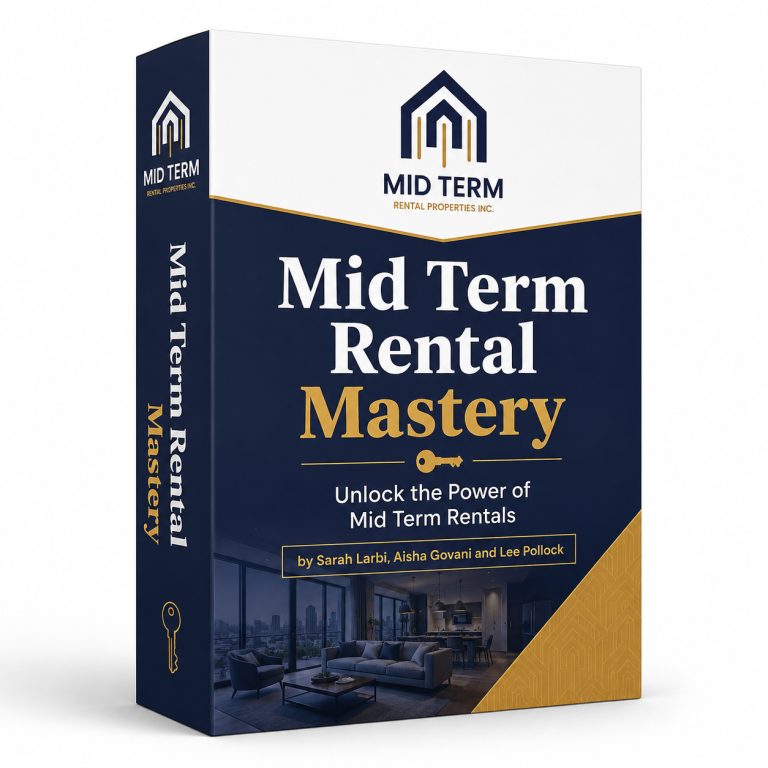
"As a real estate investor of seven years, I have been following Sarah's content from the beginning because she always provided tremendous value. When I heard about the mid term rental course, I jumped at the chance to invest in learning about this untapped strategy. The course gave me a solid basis of understanding on all thing's midterm rental related for Southern Ontario and a sturdy platform to launch one of my properties into this promising strategy. I love that Sarah always over delivers on valuable content, is generous with her time, and encourages questions. I'm looking forward to using her clear system to evaluate some of my properties to see if they have mid term rental potential. I highly recommend anyone interested in real estate investing to take one of Sarah's comprehensive courses. She is consistently ahead of the curve, inspires others to take action, and cheers on the successes of her students!"

“I have been following Sarah Larbi’s podcast for quite some time now and always gain new knowledge in regards to real estate investing. I currently own 4 investment properties and have been considering the next one to be used differently. When I saw the Mid Term Rentals course come up, it was a no-brainer. This course provided everything I needed to know including things like where to get stats in relation to occupancy, competition, amenities, etc.. to what you’ll need for the property, how to market it and more. My favorite part was the sharing of service providers that you need to consider as part of your team when dealing with mid term rentals like lawyers, cleaning professionals, and insurance companies. I will be referring back to the program notes often. It was very valuable information and some of it relates to all types of rentals. I’m glad to have this information in my back pocket!”

“Time and money invested in Sarah Larbi’s courses is always a great investment! I purchased BRRRR course last year and took an action; once I heard about mid term rental course, I knew I will derive a huge value from it and I will take an action! Knowledge is power! This course gives me confidence in my next step on my real estate investment journey. What I liked the most about this course is attention to each detail of this strategy! It is a very unique strategy as it does not fall under STR nor under LTR. When you know what exactly you are doing, running your numbers and follow the system; then there is no fear but confidence and excitement about the deal. Very happy to be a part of it knowing that there is always support from like-minded people. Thank you!”

"As a real estate investor of seven years, I have been following Sarah's content from the beginning because she always provided tremendous value. When I heard about the mid term rental course, I jumped at the chance to invest in learning about this untapped strategy. The course gave me a solid basis of understanding on all thing's midterm rental related for Southern Ontario and a sturdy platform to launch one of my properties into this promising strategy. I love that Sarah always over delivers on valuable content, is generous with her time, and encourages questions. I'm looking forward to using her clear system to evaluate some of my properties to see if they have mid term rental potential. I highly recommend anyone interested in real estate investing to take one of Sarah's comprehensive courses. She is consistently ahead of the curve, inspires others to take action, and cheers on the successes of her students!"
“I have been following Sarah Larbi’s podcast for quite some time now and always gain new knowledge in regards to real estate investing. I currently own 4 investment properties and have been considering the next one to be used differently. When I saw the Mid Term Rentals course come up, it was a no-brainer. This course provided everything I needed to know including things like where to get stats in relation to occupancy, competition, amenities, etc.. to what you’ll need for the property, how to market it and more. My favorite part was the sharing of service providers that you need to consider as part of your team when dealing with mid term rentals like lawyers, cleaning professionals, and insurance companies. I will be referring back to the program notes often. It was very valuable information and some of it relates to all types of rentals. I’m glad to have this information in my back pocket!”
“Time and money invested in Sarah Larbi’s courses is always a great investment! I purchased BRRRR course last year and took an action; once I heard about mid term rental course, I knew I will derive a huge value from it and I will take an action! Knowledge is power! This course gives me confidence in my next step on my real estate investment journey. What I liked the most about this course is attention to each detail of this strategy! It is a very unique strategy as it does not fall under STR nor under LTR. When you know what exactly you are doing, running your numbers and follow the system; then there is no fear but confidence and excitement about the deal. Very happy to be a part of it knowing that there is always support from like-minded people. Thank you!”